How to Spot Employees Who Are at Risk of Leaving: The Top 5 Indicators
Employee retention is a critical concern for any organization, and being able to identify those at risk of leaving is invaluable. Over the years, Prodoscore has gathered substantial data on employee habits, providing us with key markers that indicate when an employee may be on their way out.
While some of these indicators can be observed without Prodoscore, our solution significantly simplifies the process of identifying at-risk employees before they hand you their two-week notice.
The average cost to a business of losing just one employee is 6-9 months of an employee’s salary, not to mention the goodwill lost with clients who they may have been working with and the inevitable impact on culture and morale.
An employee retention strategy can help mitigate unexpected attrition, but insight into employee engagement is really the best indicator of flight risk.
If you can pinpoint red flags in advance, you have an opportunity to fix issues before the employee is out the door. Prodoscore’s retention risk report offers visibility into flight risks six to nine weeks before an employee tenders their resignation. Consider the financial benefit of keeping top talent on board.
Indicator 1: Minimal Management Communication
Sometimes, it is not what an employee is doing but what a manager is not doing. According to our data, at-risk employees are not being contacted by their managers on a regular basis. We’ve found that:
- 61% of managers are not checking in weekly with subordinates
- Managers only reach out every 3-4 days on average
While daily check-ins may be overkill, it’s important that managers have regular communication with their employees. The purpose is to ensure their workload is balanced and their needs are being met, and identify any pressing issues that may require management’s help.
One-on-ones are also a great time to acknowledge hard work and offer coaching and support. While we don’t suggest overwhelming them with calls and emails just to ask how they’re doing, it’s also important not to ignore those check-ins. It’s a fine line, and most managers know how to walk it.
Indicator 2: Significant Productivity Dips
Once an employee has disengaged, you’ll start seeing their productivity fall off. For businesses without a solution like Prodoscore, this will mean missed deadlines, a noticeable dip in the amount of work they are producing, and so on.
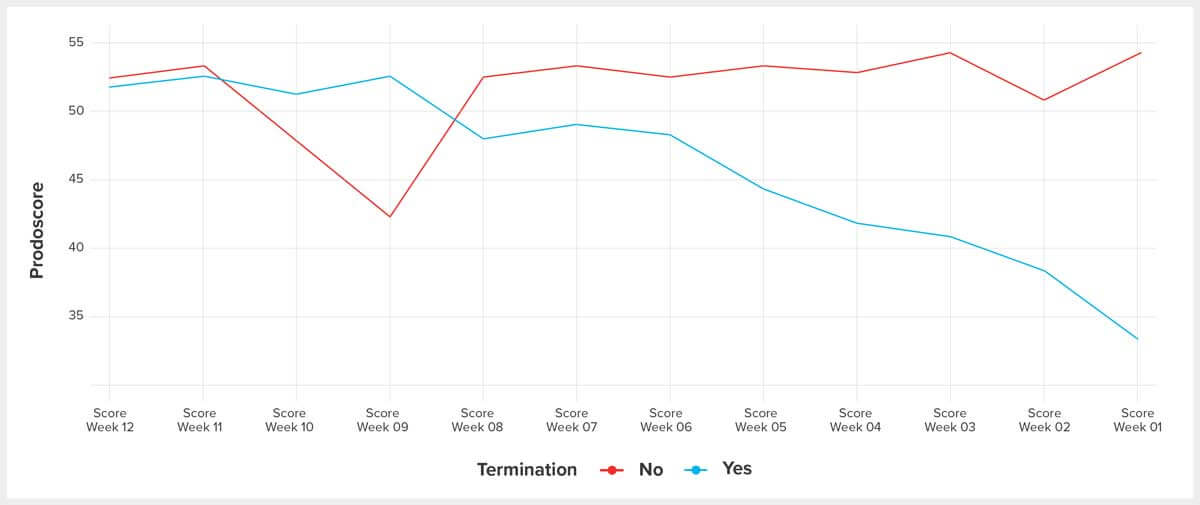
Prodoscore clients will see a decrease in employee productivity in the score. While we typically see some variance in scores, a disengaged employee often shows a consistent decrease over time.
The rate of change in an employee's Prodoscore is indicative of whether or not an employee is likely to leave
Indicator 3: Less Collaboration and Communication Internally
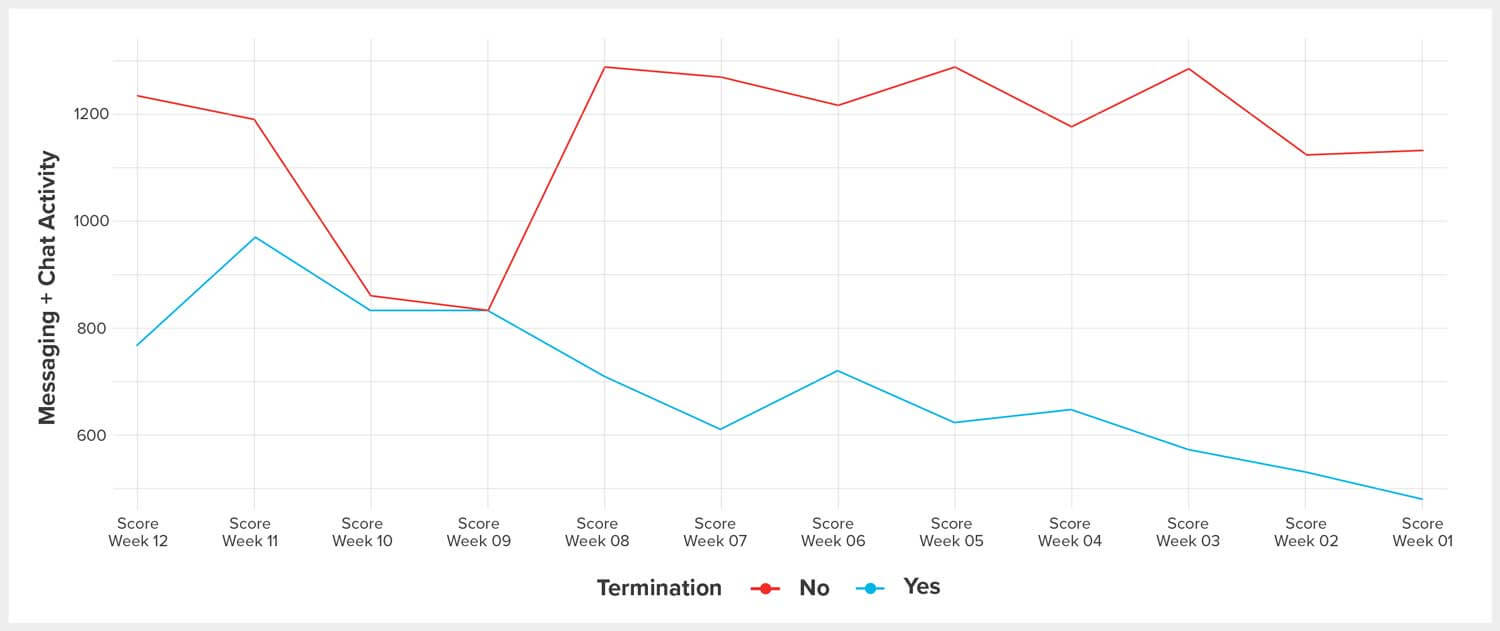
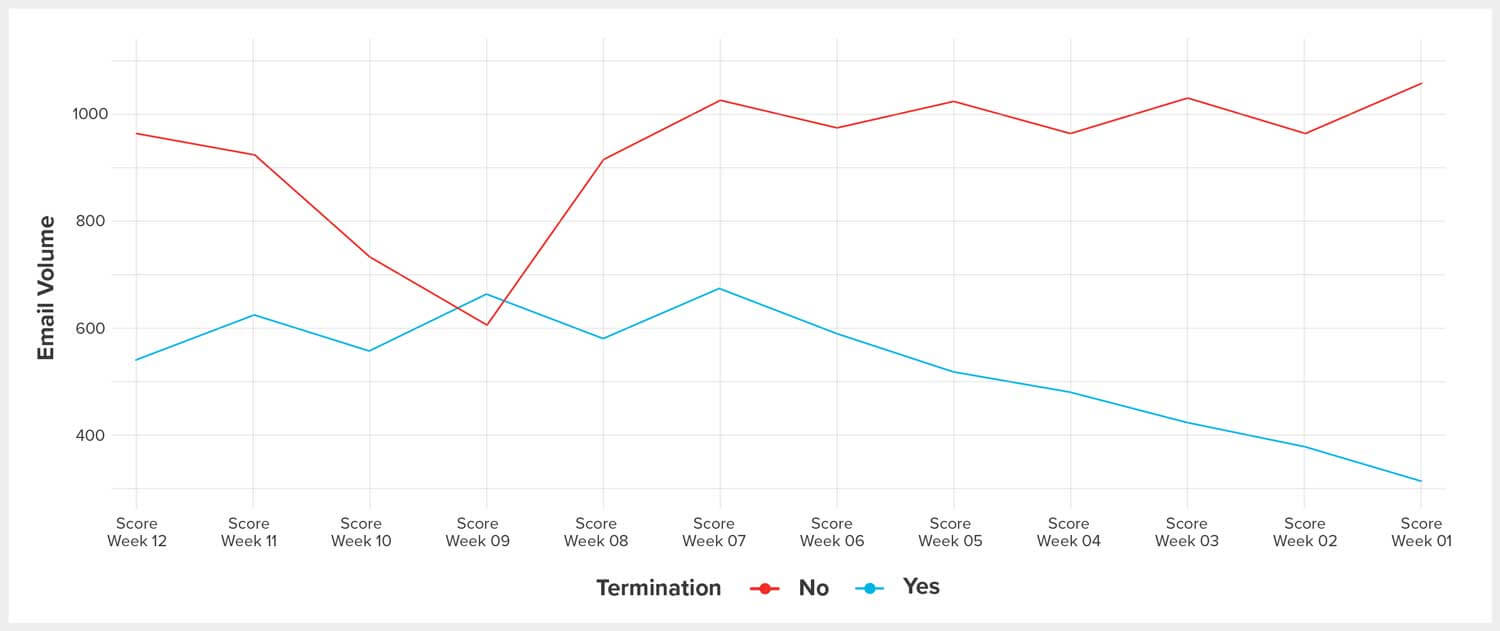
Alongside a decrease in daily activity, Prodoscore surfaces insights about internal communication, which typically takes a nosedive when an employee starts to check out. Internal communication could be emails, chats, and other digital communications with colleagues. =
Employees who are at risk of leaving give up on their work relationships, choosing not to nurture those bonds any longer. If you don’t have Prodoscore, you may want to keep an ear to the ground to learn about employees becoming distant or not participating in meetings, events, social gatherings, or similar activities.
Indicator 4: Less Time Spent in Tools
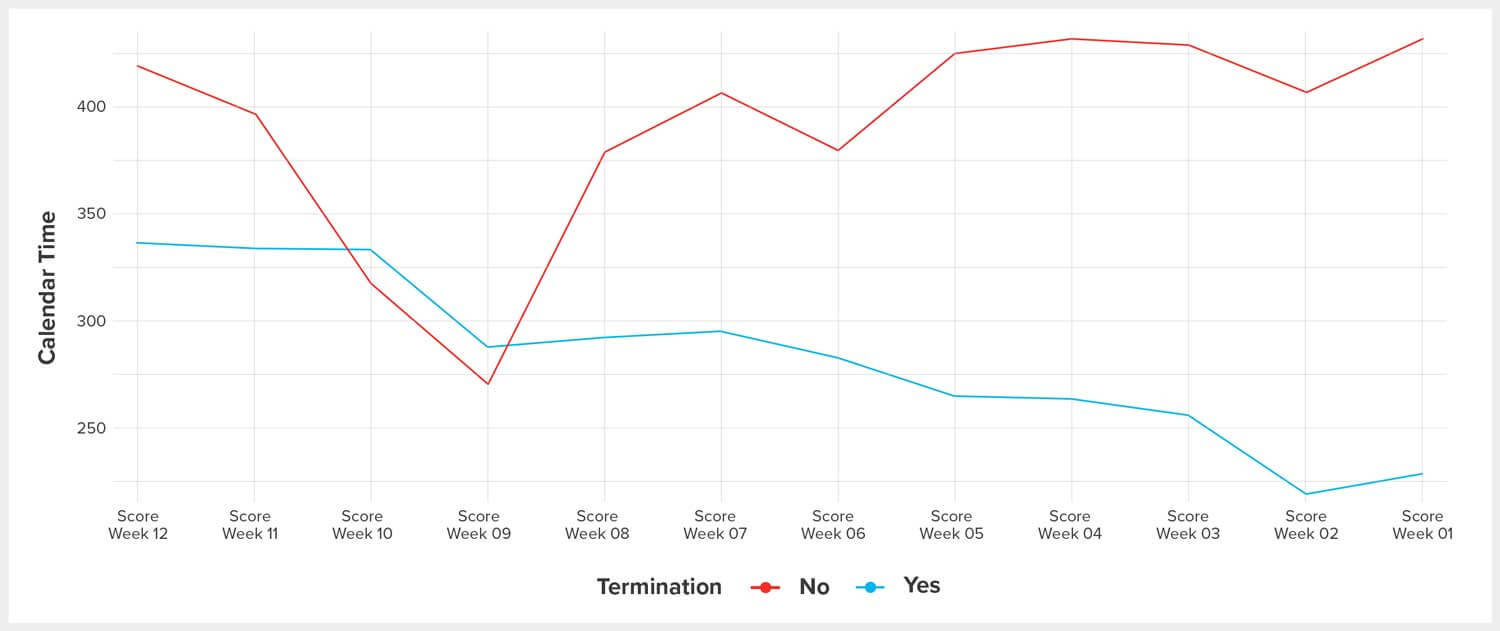
Those thinking of leaving will spend less time using company tools such as email, customer relationship management software, project management solutions, and so on. With Prodoscore, visualizing that dip is easy, and several of our dashboards offer insight into tool utilization.
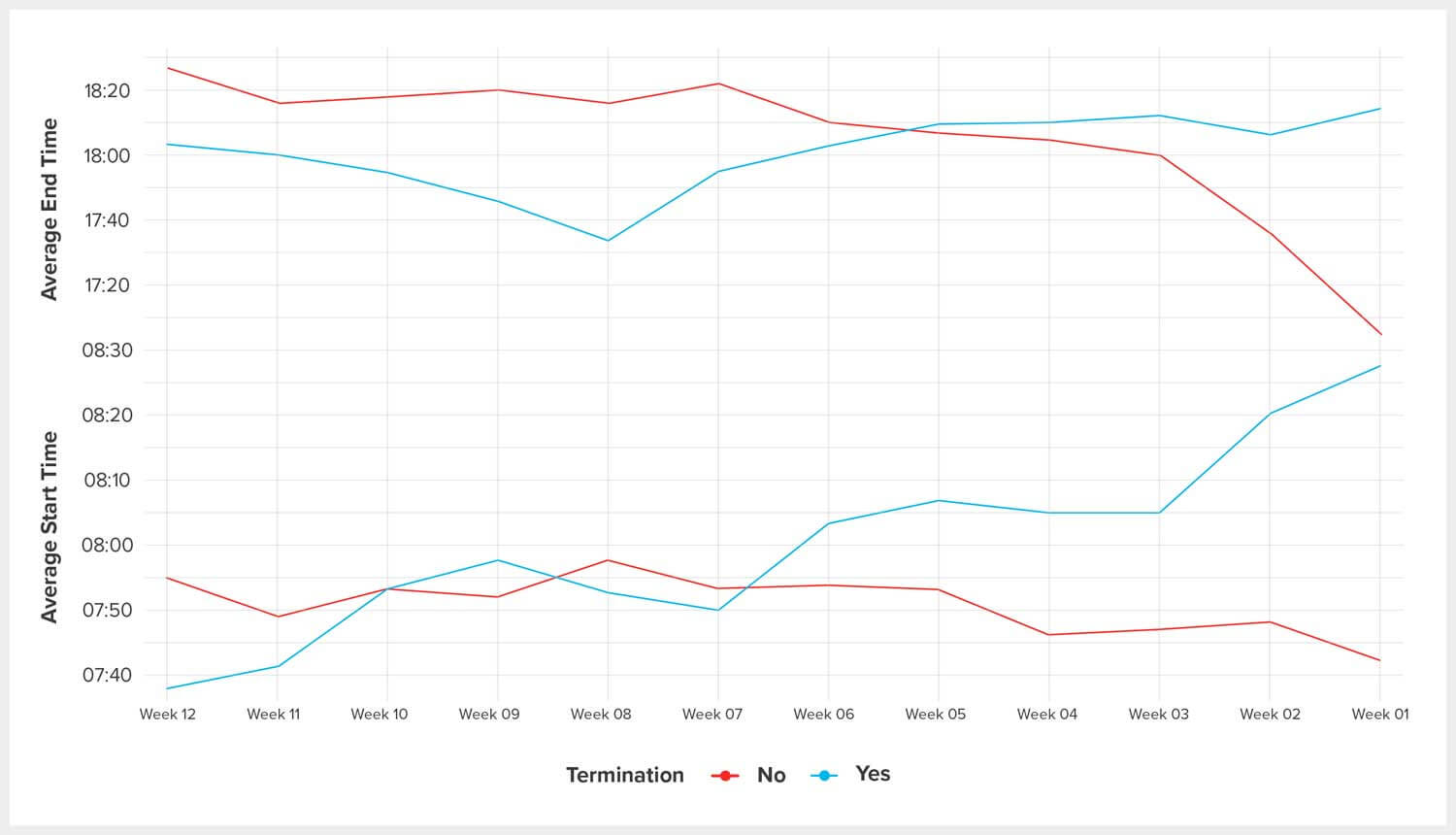
Indicator 5: Length of the Work Day
Our data has shown that another indicator of an at-risk employee is the length of the work day. Employees on their way out typically start to delay their start time, and their end time slowly creeps up over time. An engaged employee will typically be online for the same length of time each day, with variances only for appointments, picking up a kid early from school, and other usual interruptions.
How to Address Flight Risk Employees
Once you’ve spotted a few red flags, the best approach is to have a direct conversation with your staff member. Let them know what you’ve seen, and ask them what they need to feel more comfortable in their position. They’ll usually tell you, especially if you’ve caught the issues early. This step is especially important for top-performing employees as well as the people who have been around for a long period of time and have institutional knowledge.
If employee retention is high on your priority list, Prodoscore’s Retention Risk report can help. There is no better solution to let you know what your employees are doing in a non-invasive way. There are no keyloggers, cameras, or anything else that may make employees feel uncomfortable. The data we gather focuses strictly on business tools and provides objective insights that enable smarter decisions about personnel. Prodscore also offers an employee dashboard, empowering them to self-coach and take on personal development directly.
This is an update to our blog from 2021 (linked here) based on new data points.